

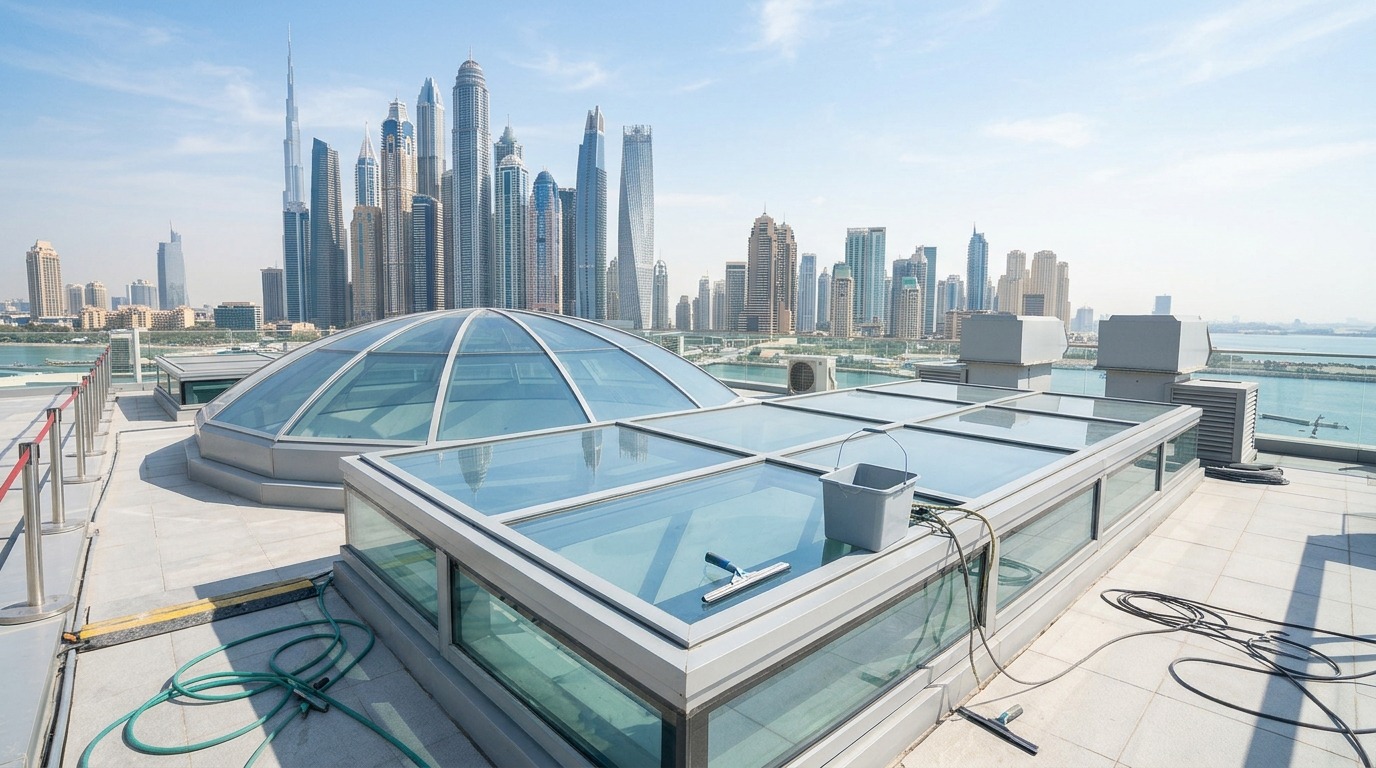
Skylights bring natural light into homes and commercial buildings, creating brighter and more inviting spaces. However, in the UAE, dust, sand, and high temperatures can quickly leave skylight surfaces dirty, and when rain does fall, it often mixes with settled dust and leaves muddy streaks behind. Over time, this reduces the amount of natural light entering a building. Regular skylight cleaning helps maintain clear views, preserve the appearance of your skylights, and identify potential maintenance issues before they become more serious.
Knowing how to clean skylights properly is just as important as cleaning them regularly. Using the wrong cleaning products or tools can scratch the surface, damage protective coatings, or affect seals and other components. In this guide, we’ll explain how to clean glass and polycarbonate skylights, which tools and skylight cleaning solutions to use, what skylight maintenance involves in the UAE’s climate, and when to consider a professional skylight cleaning service.
Why Do Skylights Need Regular Cleaning in the UAE?
The UAE’s climate is tough on skylights, which makes regular skylight cleaning in the UAE more important than in milder regions. Here’s why:
- Dust and sand buildup: Fine dust and airborne sand settle on skylight surfaces and form a cloudy film that blocks natural light. When rain does fall, it mixes with this layer and leaves muddy streaks that become harder to remove the longer they stay.
- Higher reliance on artificial lighting: As less daylight passes through a dirty skylight, indoor spaces become darker and lights end up switched on more often, reducing one of the main benefits of having a skylight in the first place.
- Humidity and coastal conditions: In coastal cities such as Dubai, Abu Dhabi, and Sharjah, humidity and salt in the air help dust cling to surfaces, leaving a sticky residue that does not simply wash away.
- Risk of surface scratches: High temperatures can bake dirt onto the surface, and sand particles are abrasive. Wiping a skylight dry or scrubbing hardened grime can scratch glass or polycarbonate, so regular, gentle cleaning is safer than occasional heavy scrubbing.
- Early detection of maintenance issues: Each cleaning is a chance to check for cracked panels, damaged seals, loose flashing, or blocked drainage channels. Catching these early is a key part of skylight roof maintenance and helps prevent leaks and costly repairs.
Read more: How Do Skylights Save Energy and Reduce Electricity Bills?
How Often Should You Clean Your Skylights?
In the UAE, most skylights should be cleaned on the outside every 3–6 months, and more often in high-exposure locations. The right frequency depends on where the skylight is installed, how exposed it is, and the type of skylight you have.
As a general guideline:
- High-exposure locations (every 1–3 months): Skylights near construction sites, open desert areas, busy roads, or the coast collect dust and residue faster. Large commercial skylights in these areas often benefit from a scheduled skylight cleaning service.
- Low-exposure locations (every 3–6 months): Residential skylights in sheltered or less dusty areas usually need less frequent cleaning.
- After sandstorms or rainfall: Check the surface for heavy dust, muddy streaks, or water stains and clean it if needed.
- Interior side (once or twice a year): The inside of a skylight collects far less dirt and usually needs only occasional dusting and wiping.
These intervals are general recommendations, so always follow the manufacturer’s care instructions for your specific skylight. Combining each cleaning with a quick inspection is also an easy way to keep up with skylight maintenance.
How to Clean Skylights Step-by-Step
Knowing how to clean skylights properly helps remove dust, stains, and residue without scratching the surface or damaging protective coatings. The process differs slightly between the inside and outside of the skylight, but in both cases, gentle products and the right tools make all the difference.
Cleaning Skylights from the Inside
The inside surface of a skylight mainly collects dust, fingerprints, and condensation marks over time. Follow these steps to clean it safely:
- Prepare the area: If you have an opening or retractable skylight, make sure it is fully closed and switch off its power supply. Move furniture away from the area below and place a towel or protective sheet on the floor to catch drips.
- Remove loose dust: Use a soft microfiber cloth or a soft-bristled brush to remove dust before applying any liquid, so it does not spread across the surface.
- Prepare a gentle skylight cleaning solution: Mix lukewarm water with a small amount of mild, non-abrasive soap. Check the manufacturer’s recommendations first, especially if the skylight has a special coating.
- Wipe the surface gently: Dampen a microfiber cloth with the solution and wipe in smooth, even strokes. Avoid applying excessive pressure, particularly around the edges and seals.
- Remove residue: Wipe the surface with a separate cloth dampened with clean water to remove any remaining soap.
- Dry the skylight: Use a clean, dry microfiber cloth to prevent water spots and streaks.
For high skylights, use a stable ladder or an extension pole rather than standing on furniture. If you notice condensation building up regularly on the inside, it may point to a ventilation or seal issue worth checking.
Cleaning Skylights from the Outside
The exterior surface is exposed to dust, sand, bird droppings, and weather-related residue, which build up quickly in the UAE.
Before you start, remember that safety comes first. Never walk, kneel, or lean on a skylight, as the panels are not designed to support body weight. Work from a safe position on the roof, use proper fall protection, and if the skylight is high, on a steep roof, or hard to reach, contact a professional skylight cleaning service instead.
- Choose the right time: Clean early in the morning or late in the afternoon when the surface is cool. Water on a hot surface evaporates too quickly and leaves streaks, and cold water on hot glass can cause thermal stress.
- Rinse off loose dirt: Gently rinse the surface with low-pressure water to loosen dust and sand before wiping. Wiping sand off a dry surface is one of the most common causes of scratches.
- Soften stubborn deposits: Soak bird droppings and dried mud with water for a few minutes until they soften. Do not scrape them off.
- Apply a suitable skylight cleaning solution: Use lukewarm water and a mild, non-abrasive cleaner approved for the skylight material. Avoid harsh chemicals, abrasive pads, and high-pressure washing unless the manufacturer allows them.
- Clean the surface carefully: A soft microfiber mop or soft-bristled brush on an extension pole is the safest skylight cleaning tool for most exterior surfaces. Work gently without pressing on the panels.
- Clear the frame and drainage: Remove sand and debris from the frame, drainage channels, and weep holes so water can drain freely.
- Rinse, dry, and inspect: Rinse away all cleaning solution, then dry with a soft microfiber cloth (a rubber squeegee can be used on glass). Check for cracks, damaged seals, or water pooling around the frame.
Glass and polycarbonate skylights do not always respond to the same products, so it helps to know the difference before you choose your cleaner.
How to Clean Glass vs. Polycarbonate Skylights
The best way to clean skylights depends on their material, as glass and polycarbonate have different cleaning requirements. Using the right products and tools helps remove dirt without scratching the surface or damaging protective coatings.
- Glass skylights: Glass is relatively durable and can be cleaned with lukewarm water and a mild, non-abrasive skylight cleaning solution or an ammonia-free glass cleaner. Use a soft microfiber cloth or a rubber squeegee, then dry the surface to prevent streaks. For hard water spots, a diluted white vinegar solution usually works well. If the glass has a special coating, check the manufacturer’s instructions before using any cleaner.
- Polycarbonate skylights: Polycarbonate scratches more easily than glass, so rinse it with plenty of clean water to loosen dust and sand before wiping gently with a soft microfiber cloth. Use only mild soap and water or a cleaner approved by the manufacturer. Avoid ammonia- or alcohol-based glass cleaners, solvents, abrasive sponges, scrapers, and paper towels, as they can damage the surface or its protective coating. The same care applies to acrylic sky domes.
For both materials, always follow the manufacturer’s cleaning instructions. Choosing the right skylight cleaning solution helps preserve the surface, maintain clarity, and prevent unnecessary damage during routine cleaning.
Explore: Glass vs Polycarbonate Skylights: Pros, Cons & Which to Choose
Skylight Maintenance Checklist: 5 Key Things to Check
If you are wondering how to maintain skylights, the answer goes beyond cleaning the surface. Regular skylight maintenance means inspecting the main components to catch early signs of wear, prevent water leaks, and keep the skylight working properly:
- Seals: Check the seals around the skylight for cracks, gaps, or signs of deterioration. Water stains on the ceiling around the skylight or condensation between double-glazed panes often point to a failing seal. Have damaged seals repaired or replaced as soon as possible.
- Flashing: Inspect the flashing around the skylight frame for loose sections, corrosion, or visible damage. Properly maintained flashing helps prevent water from seeping into the roof.
- Drainage: Clear sand, dust, and debris from drainage channels and weep holes so water does not collect around the skylight, particularly after rainfall.
- UV damage: Look for discoloration, cloudiness, brittleness, or cracking that may indicate damage from prolonged sun exposure. Polycarbonate panels and protective coatings may need particular attention.
- Moving parts: For retractable and vented skylights, check hinges, tracks, and opening mechanisms for sand buildup, unusual noises, or restricted movement, and make sure any rain sensors are clean and working. Clean and lubricate components according to the manufacturer’s instructions, and leave motor or electrical issues to a technician.
Including these checks in your routine skylight roof maintenance helps you spot potential problems early. If you notice persistent leaks, damaged structural components, or malfunctioning opening mechanisms, consult a qualified professional for inspection and repairs.
When to Call a Professional Skylight Cleaning Service
Routine skylight cleaning is manageable for small, accessible skylights, but some situations call for professional equipment and expertise. A professional skylight cleaning service helps protect the skylight from damage and ensures the work is carried out safely.
- Safety concerns: Skylights on steep roofs, at significant heights, or in hard-to-reach locations can be dangerous to access, and falls through roof glazing are a well-known risk in roof work. Professionals have the right safety equipment and training to work in these areas without putting themselves or others at risk.
- Large and commercial skylights: Large glass roofs and commercial skylights often need specialized equipment and techniques to clean extensive surfaces evenly without causing damage.
- Built-in cleaning systems: For large or hard-to-reach skylights, a motorized cleaning system provides safe access to both the inside and outside of the skylight, making it easier to clean the glazing and carry out maintenance without stepping onto the roof structure.
Frequently Asked Questions About Skylight Cleaning and Maintenance
Here are answers to common questions about keeping skylights clean, preventing damage, and maintaining their performance over time:
What is the best way to clean skylights without leaving streaks?
Use a soft microfiber cloth, clean water, and a suitable non-abrasive cleaning solution. Clean the surface when it is cool, rinse away any residue, and dry it with a clean microfiber cloth to minimize streaks and water spots.
Can pressure washing damage a skylight?
Yes. High-pressure water can damage seals, force water into joints, or harm certain panels and coatings. Use a regular garden hose with gentle water pressure instead, and follow the manufacturer’s recommendations for your specific skylight.
Why does my skylight look cloudy even after cleaning?
Cloudiness after cleaning is often caused by leftover soap or mineral residue, which a thorough rinse with clean water usually removes. If it persists, it may come from condensation between glazing layers, scratches, surface deterioration, or a damaged protective coating. In that case, have the skylight inspected to identify the cause.
Can skylights be cleaned during summer in the UAE?
Yes, but timing matters. Clean early in the morning or in the evening, when the surface is cool and the sun is less intense. For professional cleaning teams, the UAE’s annual midday break also prohibits outdoor work under direct sunlight from 12:30 pm to 3:00 pm, typically from mid-June to mid-September.
Clearer Skylights, Brighter Spaces
With the right products and routine checks, regular skylight cleaning in the UAE keeps your skylights clear and in good condition for years.
Established in the UAE in 1996, Al-Mamary specializes in skylight manufacturing and has completed more than 700 projects across the Middle East and North Africa, including villas, schools, shopping malls, and commercial buildings. In addition to custom-designed skylights, the company offers a motorized cleaning system designed to make skylight cleaning and maintenance safer and more accessible from both the inside and outside.
Whether you are planning a new skylight project or looking for a more practical way to maintain an existing one, contact the Al-Mamary team to discuss your project and explore the right solution for your building.
Find out: Operable Skylights vs Fixed Skylights: Pros, Costs & How to Choose
Learn about: Skylight Installation: Your Complete Guide to the Process & Benefits