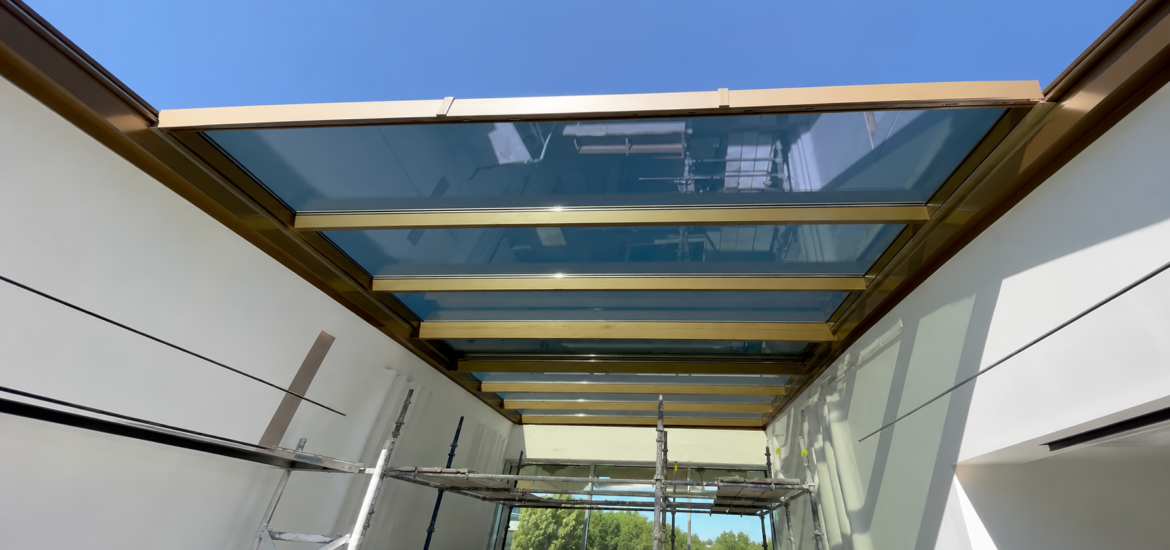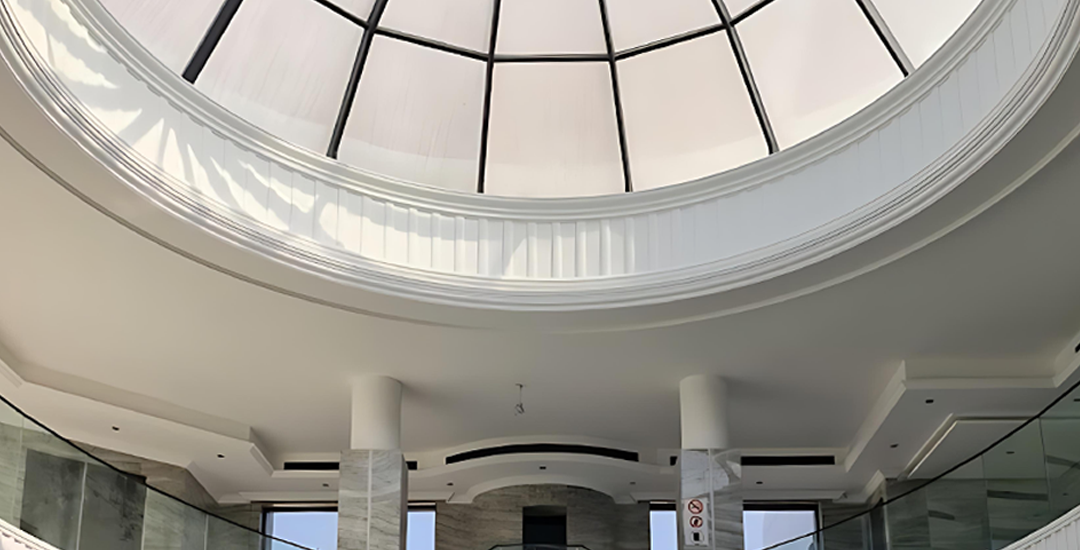

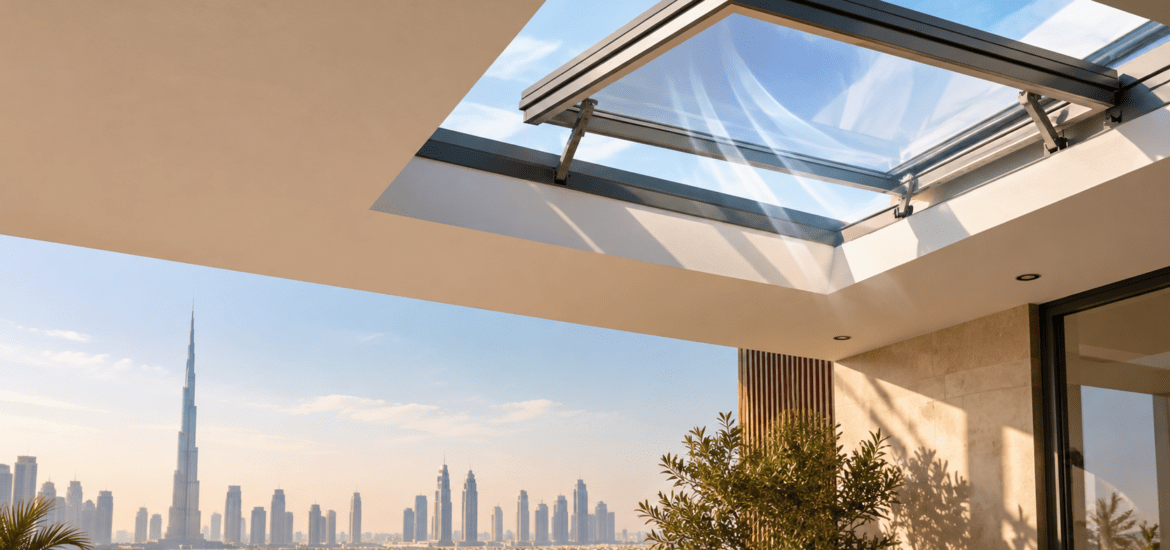
Vented skylights are one of the most notable types of skylights, thanks to the way they work. They are highly sought after by homeowners, business owners, and property managers who want to elevate their spaces with natural daylight and enhanced ventilation.
So, what is a vented skylight exactly? How does it work? And what are the benefits of vented skylights? Continue reading our comprehensive guide to learn how these skylights can help enhance your space’s functionality and overall experience.
What is a Vented Skylight?
A vented skylight is a type of skylight that can be opened in different ways to allow natural air to enter the space while letting stale air escape, providing natural ventilation and enhanced air quality. These skylights play a crucial role in improving the overall indoor environment, especially in spaces that require regular or constant ventilation like offices, kitchens, bathrooms, and others.
Also known as a vented skylight window, this type of skylight combines the benefits of natural daylight with improved airflow and ventilation. More on the benefits below.
Benefits of Vented Skylights
Vented skylights offer you a wide range of benefits that make your space look better, feel fresh, and operate much easier and more efficiently than without them. Here are some of the benefits of vented skylights that you can’t miss out on, showing you how they elevate your place—whether it’s residential, commercial, or industrial:
1) Natural Ventilation
While this is the most obvious benefit, it can be the biggest motivation for getting a vented skylight. Since they can be opened, vented skylights create a large or small opening—depending on the design—to allow stale air to leave the room or building and fresh air to enter.
This alone can create excellent natural airflow, especially when the skylight is installed in the proper place and orientation. The airflow can be enhanced even further when the skylight is combined with other windows and openings.
2) Passive Cooling
Another benefit of vented skylights is their contribution to passive cooling under suitable weather conditions. By opening the skylight, you allow the hot air to leave the space and let the cooler air enter. This continuous airflow helps regulate indoor temperature, helping keep indoor spaces cool and the overall environment comfortable.
It is important to note that you can benefit from this natural cooling effect only if the skylight is installed and positioned properly. The climate and weather conditions also play a crucial role, as passive cooling depends on the temperature outside.
Generally speaking, the outdoor temperature must be lower than the indoor temperature for this cooling effect to take place, such as during cool mornings and evenings.
3) Humid Control
Moisture accumulates quickly in the air inside high-humidity areas and eventually turns into water droplets when meeting cooler surfaces. This is quite common in bathrooms, kitchens, and laundry rooms, other than spas, changing rooms, commercial kitchens, and indoor swimming pools, among others. So, how do vented skylights help with humidity?
Opening a vented skylight allows humid, moisture-filled air to escape and brings fresh air into the space. This can help prevent or reduce the risk of damage associated with excessive indoor humidity, such as mould growth, dampness, and even damage to fabrics, materials, or machinery.
4) Odour Removal
Benefits of vented skylights go beyond cooling, ventilation, and humidity control, as they can also play a key role in removing odour build-up inside some places. Think kitchens, utility rooms, commercial kitchens, and even workshops where chemical odour accumulates fast.
By simply opening the skylight and letting fresh air inside, you significantly reduce odours caused by cleaning, cooking, moisture, and other everyday activities, keeping the overall atmosphere feeling fresh and clean.
5) Energy Saving
With all these benefits combined, energy savings and improved efficiency naturally follow when using vented skylights. By relying more on skylights for natural ventilation, cooling, and daylighting, you can reduce the energy consumption of HVAC systems used to mechanically cool and ventilate the space, while also reducing the need for artificial lighting. These skylights help cut energy costs, which is a great benefit for commercial places, public buildings, and even villas.
Read more: How Do Skylights Save Energy and Reduce Electricity Bills?
Now that you know the benefits of vented skylights, how do they work exactly? What are the mechanisms that enable them to deliver such effective performance?
How Does a Vented Skylight Work?
Wondering how a vented skylight works? The core concept behind vented skylights is that they can be opened to allow natural airflow, but how is this achieved? These skylights come in various configurations, with each one of them integrating a specific working mechanism.
Here are the different kinds of vented skylight configurations and how they work:
1- Hinged: This is the most common type, and it is opened by lifting one edge outward while the other remains fixed. Some can be opened slightly, while others can open wider depending on their design.
2- Top-Hinged: This vented skylight works quite similarly to the above type. You can open it by lifting the skylight’s lower portion, while the top remains fixed, creating a gap at the bottom.
3- Center-Pivoted: This configuration works differently, as the skylight rotates around a central axis, meaning that one part of the skylight moves outward while the other moves inward.
4- Sliding: The panels of these vented skylights open by sliding and retracting, creating an opening for airflow. These are also known as retractable skylights.
5- Louvred: Instead of the entire glass panel opening, individual slats, or louvres, tilt open to allow air to pass through.
That being said, vented skylights for homes can come in any of these formations and styles. Are you considering one of these for your home? A vented skylight may be just the missing piece from your villa! Below is a brief overview of where they can be used.
Vented Skylights for the Home: Where Can You Use Them
As mentioned previously, these skylights are typically used in places with high humidity and needing consistent ventilation. So, what does that mean for vented skylights for your home? Where can they be installed?
- Bathrooms: One of the most obvious ones. Water accumulates and humidity builds up, making the atmosphere unpleasant. A vented skylight can easily take care of that.
- Kitchens: One of the busiest spaces in the home that benefit greatly from vented skylights. Not only will they get rid of cooking odours and excessive heat, but they also provide natural, refreshing ventilation.
- Bedrooms: While the bedroom may not be particularly humid, having a vented skylight there provides natural ventilation and a pleasant airflow, on top of natural daylight.
- Poorly Ventilated Spaces: Think enclosed hallways and stairwells, laundry rooms, attics, garages, and walk-in closets, just to name a few.
If these are some of the places where a vented skylight would be the perfect addition to your home, what are the needed considerations for this next step? Below is what you need to know before vented skylight installation.
Vented Skylight Installation: What to Consider
Vented skylight installation must be carried out by qualified professionals to ensure a proper and safe installation. But first, the following factors should be considered to support proper skylight planning, manufacturing, and installation:
1. Skylight Placement and Orientation
This refers to where exactly the skylight will be installed—overhead or on the wall—and which direction it should face. Ideally, it should provide maximum daylight without causing overheating while also being positioned where air can easily enter and circulate for effective ventilation.
2. Size and Configuration
These two elements complement each other—you don’t want to end up with a skylight that is too big or too small, or one that you cannot reach and open comfortably, as that defeats the purpose. Here, you must consider both its size and configuration to ensure optimal performance and ease of use.
3. Structural Elements
These include the roof or wall’s structure and overall condition, helping determine whether or not they can safely and efficiently support and integrate the vented skylight. If the structure is not in the best condition, installers may need to reinforce it using various methods during installation.
4. Glazing Materials
You’ll have to decide between glass and polycarbonate depending on the building’s requirements and local climate. This choice is crucial for overall performance, as it impacts thermal regulation, daylight, durability, energy efficiency, and much more.
More details: Glass vs Polycarbonate Skylights: Pros, Cons & Which to Choose
5. Ventilation Needs
Recognising how much air the room needs plays a big role in determining the right vented skylight for you. If the place lacks ventilation because there are no windows or minimal openings, it is important to go with a skylight configuration that allows for a bigger opening. But a bedroom with existing windows might need a skylight that opens only slightly. No big opening needed.
Explore now: Skylight Installation: Your Complete Guide to the Process & Benefits
You will be able to determine each one of these factors, among others, with the professional guidance of an experienced skylight manufacturer and installer, like Almamary.
How Much Does a Vented Skylight Cost?
There isn’t a fixed price for vented skylights, since their cost depends entirely on many factors, including their configuration, size, glazing material, frame, building requirements, installation needs, and any other aspects that impact how the skylight is planned, manufactured, and installed. By choosing your vented skylight from a trusted skylight manufacturer, you can make sure to get your money’s worth!
FAQs about Vented Skylights
Here are some of the most common questions and their answers:
Can vented skylights be opened and closed automatically?
Yes, vented skylights can be opened and closed automatically if they are equipped with motorised mechanisms. Meaning? You can open them using a remote control, a wall switch, or even a compatible smart system.
Can vented skylights be installed in existing roofs?
Yes, vented skylights can definitely be installed in existing roofs, provided that the roof’s structural integrity allows for it. If needed, specific reinforcement measures can be taken to strengthen the overall structure and accommodate the skylight installation.
What is the difference between a vented skylight and a fixed skylight?
A vented skylight can be opened, so it is also known as an openable skylight, while a fixed skylight cannot be opened, so it functions like a closed window overhead.
How long do vented skylights typically last?
A vented skylight can last between 10 and 20 years, depending on many factors, including maintenance, installation, glazing material, weather conditions, and others.
Can vented skylights be fitted with insect screens?
Yes, insect screens can be fitted to many vented skylights, helping prevent insects from entering when the skylight is open. This allows you to enjoy natural ventilation while keeping unwanted pests outside.
Vented Skylights from Almamary
If you want to get a vented skylight for your place—whether it is your home, a restaurant, a warehouse, or any other building—then working with Almamary is your next step. Almamary for Skylights has decades of experience in designing, manufacturing, and installing skylights of all types, including openable and retractable skylights.
Contact our team now to begin working on your vented skylight.