

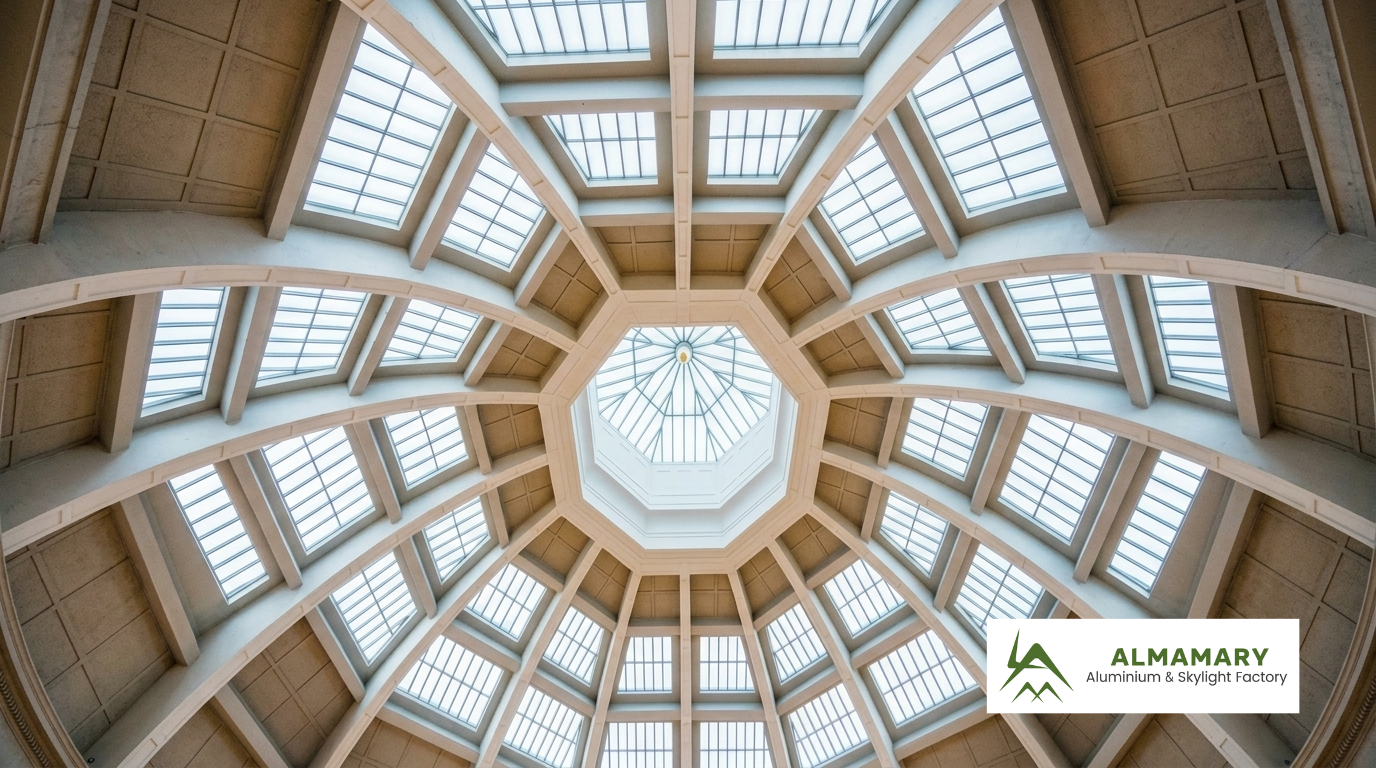
Are you planning to install a skylight but are unsure of which material is best for you—glass or polycarbonate? Is polycarbonate better than glass, or is it the other way around? Understanding the difference between these glazing options is essential for making the right choice with confidence and ease.
Continue reading to explore our detailed breakdown of glass vs polycarbonate skylights, covering their advantages and disadvantages. While they are the standard in the industry thanks to their structural and compositional characteristics, choosing the glazing material that best suits your needs is what will help you get the most from your skylight.
What Are Glass Skylights?
Glass skylights are roof-mounted glazed openings designed to illuminate a building with crisp, clear natural light. They are characterised by excellent optical clarity, UV protection, scratch resistance, and other properties.
Beyond their functionality, glass skylights are distinguished by their visual appeal, particularly when fitted with coloured glass. They are available in a wide range of shapes and sizes and can be manufactured using different glazing types to suit various architectural needs and performance requirements.
Read more: Glass Skylights: Benefits, Types, and Installation Guide
Further details: Coloured Skylights: Key Features, Installation, and Design Ideas
What Are Polycarbonate Skylights?
Polycarbonate skylights are skylight structures installed within roof openings to allow diffused natural light to enter interior spaces. These skylights are fitted with polycarbonate sheets, making them incredibly lightweight, highly impact-resistant, and capable of withstanding harsh weather conditions.
They deliver reliable and effective thermal insulation, UV protection, and durability, ensuring outstanding performance. Apart from functionality, these skylights come in various shapes due to the flexibility of polycarbonate panels, allowing them to accommodate different architectural designs.
Explore now: Skylight Shapes: 5 Skylight Options to Consider
Glass vs Polycarbonate Skylights: Key Differences
Skylights are built to last you decades, so be sure to choose the right glazing material to support such longevity and reliability for years to come. Our glass vs polycarbonate skylight comparison below outlines the advantages and disadvantages of each type, exploring their unique features and how they benefit you.
Durability
Durability refers to the glazing’s ability to resist external factors without sustaining damage. That being said, both materials are highly durable but in slightly different ways. Glass skylights can endure environmental elements without yellowing or degrading with time, keeping their high-end appearance intact. They are also incredibly scratch resistant, so the surface retains its sleek look despite abrasive particles rubbing against the surface during cleaning. However, glass is less resistant to strong impact compared to polycarbonate.
Polycarbonate skylights, on the other hand, are extremely resistant to high impact coming from hail, falling debris, and accidental impact, so they are very difficult to shatter and crack. In addition, they endure weather conditions and sun exposure, yet they are more likely to yellow or degrade with time. To counter this, specialised coatings are added to keep the material in good condition. Notably, polycarbonate is less scratch-resistant than glass, so it is your unique needs that determine which one is more suitable for you.
Thermal Performance
One of the main benefits of skylights is their ability to regulate indoor temperature, keeping it warm in winter and cool in summer. Therefore, thermal performance is a key aspect of the glass vs. polycarbonate skylights comparison. Both glass and polycarbonate panels deliver satisfactory thermal performance—but there is more nuance to this statement.
Glass generally offers superior thermal insulation, especially when manufactured as double- or triple-glazed units with Low-E (low-emissivity) coatings or insulating gas fills, reducing heat transfer and improving temperature control. To compare, multiwall polycarbonate sheets provide good insulation as well thanks to their internal air chambers, which are hollow spaces in-between layers, functioning like insulating barriers that slow down heat transfer.
Nevertheless, glass thermal insulation remains stronger, positioning polycarbonate as a more practical choice for applications where heat control is not a primary concern, such as warehouses or agricultural buildings.
Light Quality
If you are debating whether or not glass or polycarbonate roofs are better for natural lighting, each option offers incredible daylighting, but in their own unique way. Glass skylights provide exceptionally clear natural daylight, allowing colours to appear more accurate. And since glass does not significantly diffuse sunlight, it maintains excellent optical clarity. However, this does not result in excessive glare, as glass is usually treated with features that help control glare and improve indoor visual comfort.
Polycarbonate skylights, on the other hand, fill interior spaces with soft, diffused natural daylight, creating more uniform illumination with fewer harsh shadows and reduced contrast. Unlike glass skylights, they scatter incoming sunlight, resulting in a lighting effect that is less direct and less optically clear. While the light is not as crisp or transparent as that provided by glass, its even distribution helps minimise glare and creates a comfortable, balanced indoor environment.
More information: Retractable Skylights: The Ultimate Solution for Natural Light and Ventilation
Weight and Installation
These are crucial elements when exploring the pros and cons of glass and polycarbonate skylights and roofs. Regarding weight, glass is significantly heavier than polycarbonate, especially double- and triple-glazed units. This means that glass roofs require stronger structural support to carry the load safely and efficiently. As a result, their installation process needs careful handling, and it tends to be more complex.
On the contrary, polycarbonate is significantly lighter than glass, which is the case even with multiwall panels. Therefore, installation procedures are easier and simpler, and structural integration can be carried out without major reinforcements. Polycarbonate skylights, as such, can be installed on lighter roof structures that would not be able to handle glass skylights without lots of additional support.
Learn now: Skylight Installation: Your Complete Guide to the Process & Benefits
Maintenance and Lifespan
The comparison of glass vs polycarbonate skylights goes beyond installation and into their long-term needs and longevity. Glass skylights generally have a longer lifespan than polycarbonate skylights, typically lasting between 30 and 50 years, whereas polycarbonate skylights have an average lifespan of 10 to 15 years.
Glass is a highly stable glazing material, meaning that it resists yellowing, weathering, and degradation, making its maintenance requirements relatively minimal. With regular cleaning, it retains its optical clarity, transparency, and premium appearance for decades. Meanwhile, high-quality UV-protected polycarbonate offers good resistance to weathering and long-term deterioration, too. However, its softer surface is more prone to scratching, so it requires more careful cleaning and upkeep.
Appearance
The glass vs polycarbonate skylights comparison also entails a general overview of both their appearances. Glass has a premium and superior look to it, especially with its luxurious finish, making it a highly sought-after option in modern architectural settings and elegant destinations. Coloured glass skylights featuring floral, geometric, or other designs are also breathtaking architectural statements that elevate the entire place to a new level of visual aesthetic.
Polycarbonate skylights generally appear less sharp and optically clear than glass, particularly when multiwall sheets are used, making them perfect for practical applications, such as warehouses, factories, and industrial facilities, where durability and functional performance is prioritised over aesthetics. Although polycarbonate is not typically available in decorative coloured glazing like glass, it is offered in a range of finishes, including clear, bronze, grey, and opal, allowing different levels of light transmission, privacy, and solar control.
Explore further: What Makes a Skylight Design Instagrammable?
Cost
Cost is the final aspect of our glass vs polycarbonate skylights breakdown, highlighting it as a crucial element for buyers to look into. It is worth mentioning that the exact cost of any skylight depends on the material, coatings, frame material, shape, size, and many other elements. That being said, glass skylight prices are generally higher than polycarbonate roofing solutions, due to the former’s greater weight and more complex manufacturing and installation procedures.
Here is a summary of the differences between glass and polycarbonate skylights, outlining the key takeaways from the comparison above:
| Key Difference | Glass Skylights | Polycarbonate Skylights |
|---|---|---|
| Durability | Highly durable, extremely scratch-resistant | Highly durable, incredibly impact-resistant |
| Thermal Performance | Superior insulation, especially with coatings and insulating gas | Good insulation, especially with multiwall sheets |
| Light Quality | Crisp and clear, no glare | Softer and diffused, no glare |
| Weight | Significantly heavier, especially if double- or triple-glazed | Not only lighter than glass, but also very lightweight in general |
| Installation | More complex, likely to need additional structural support | Simpler, less likely to need additional structural support |
| Maintenance | Minimal needs | Needs more maintenance |
| Lifespan | Longer lifespan | Shorter lifespan |
| Appearance | More high-end, premium, and sleek looks. Preferred for aesthetic purposes | Less clear than glass, used for more functional purposes |
| Cost | Generally higher upfront cost | Generally lower upfront cost |
Considering all the above factors, which skylight material is best for you?
Glass or Polycarbonate Roof: Which Should You Choose?
After having explored an in-depth analysis of both types, which one is best for you? The answer entirely depends on the spatial requirements of the building and the project. So, choose glass if you prioritise optical clarity, visual appeal, energy efficiency (double- or even triple-glazed), and long-term durability. Keep in mind that glass would require a bigger investment upfront. Nevertheless, glass skylights are best suited for homes, offices, hotels, retail places, and architecturally focused projects.
Polycarbonate, on the other end, should be your pick when impact resistance is the priority. It is also perfect for lightweight structural loads, softer daylight, incredible design flexibility, and a more limited budget. Considering that polycarbonate is performance-driven, it is best suited for warehouses, factories, industrial buildings, sports halls, schools, and other large-span commercial applications.
Learn more: Commercial Skylights: How to Choose the Best One?
FAQs about Glass and Polycarbonate Roofs and Skylights
Here are some of the most frequently asked questions and their answers:
How long do glass skylights last?
Glass skylights can last from 30 to 50 years, depending on how well they are maintained and the overall quality of glazing and other structural elements.
What type of glass is best for skylights?
Tempered and laminated glass are generally the best glass types for skylights, as they provide amplified structural strength and durability as well as enhanced safety and UV protection.
What is the alternative to glass skylights?
Polycarbonate sheets are the alternative to glass skylights thanks to their lightweight nature and incredible durability and strength. They are also the more economical option, as they do not require high upfront costs like with glass roofs.
Does polycarbonate turn yellow in the sun?
Yes, unprotected polycarbonate sheets turn yellow in the sun, which is why manufacturers add specialised protective coatings to keep them from degrading and yellowing due to prolonged sun exposure.
Is a glass roof better than polycarbonate?
Not necessarily. The best option out of both depends on the project’s structural requirements and the building’s spatial needs, as each roof type has its own unique advantages and disadvantages that fit different purposes.
The Top Glass and Polycarbonate Skylights from Almamary
Almamary is a leading skylights manufacturer in the MENA region, providing the best skylight solutions for residential, commercial, and industrial applications. Our team of experts inspects the building where the skylight is to be installed, so we identify priorities, needs, and recommendations, ultimately choosing the right glazing material for premium performance for decades to come.
Contact us to get started today.